
 Please, I beg of you, don’t tell me that my age is “just a number” or “all a matter of attitude.” I get it, really I do, that you mean well, and that you think I’ve got a youthful spirit and that 52 is not 92. But I am here to tell you that being fiftysomething is more than a number. Regardless of one’s perky outlook, it is the startling—although it shouldn’t be a surprise seeing that I’ve had five decades to get used to the idea—realization that more than half my life is over. With that comes, if you’re paying attention at all, some kind of evaluation about where you are and where you want to go from here.
Here’s what being 52 is: weakening eyesight, creaking knees, a need for naps, an ever-present countdown toward the rest of my life’s goals, missing my dead father, learning the language of Mother’s dementia, dreaming of going back to school yet again, wanting to make a difference, a longer list of books I haven’t read, grieving misplaced relationships and lost opportunities, wondering what will become of me. Thankfully, being middle-aged (humor me, please; I know I’m stretching the math here) also brings sharpened awareness of even the smallest joy, an appreciation for what I’ve accomplished and what I’ve avoided, a heightened curiosity, increased energy for what simply must get done and a gentle release of what won’t, discarding what no longer fits me—from old clothes to worn out grievances—without guilt, overflowing gratitude for steadfast friends and supportive relations, and trusting it will be okay in the end.
On this icy winter morning, as I consider my next steps, I raise my decaf latte to the fabulous Elaine Stritch, who bears witness to the “courage of age” with such blazing fortitude that I am made bolder simply by listening to her on National Public Radio.
Sing it, sister, I say. Shout it, growl it, live it.
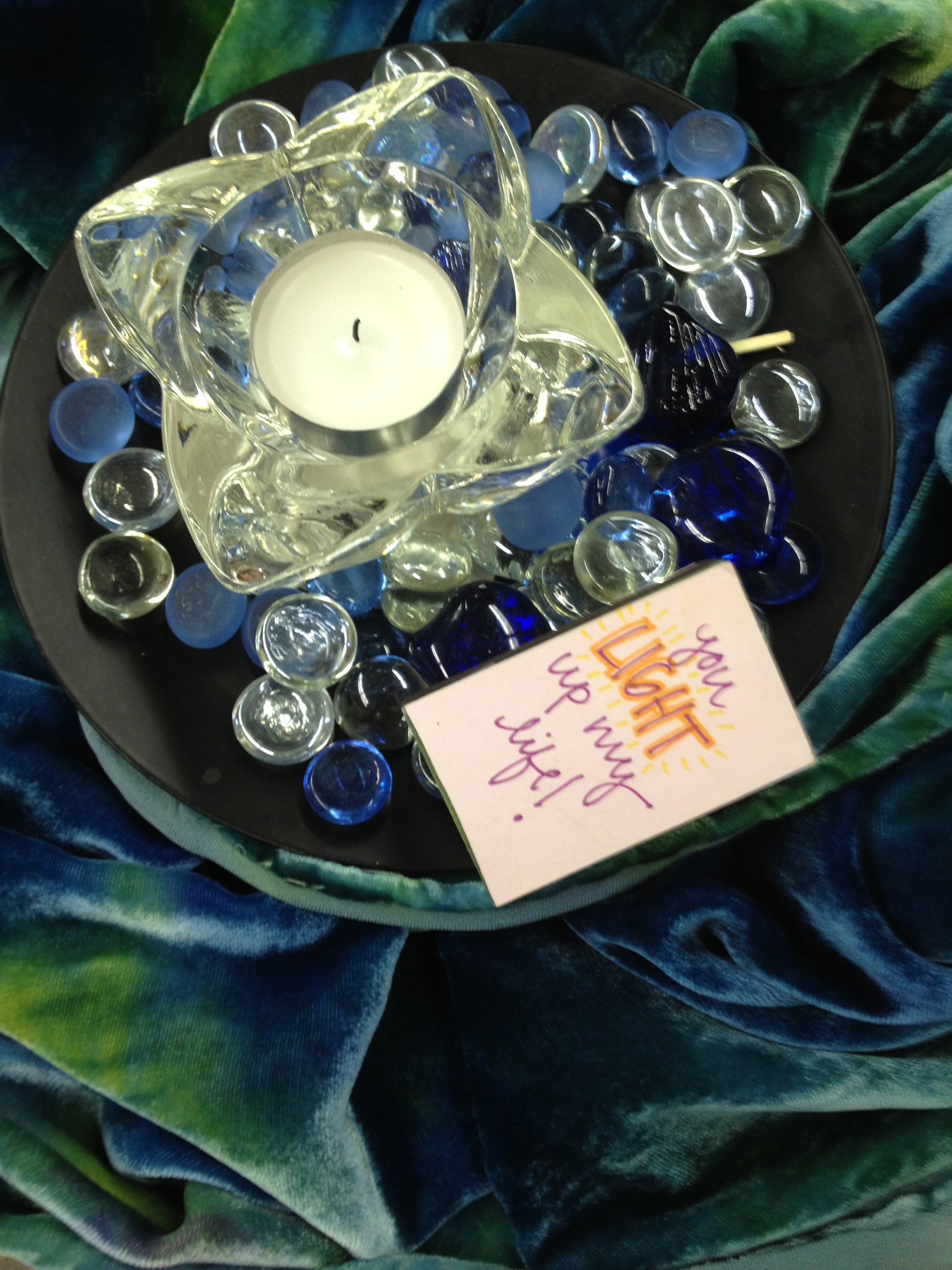
 What the ornaments hanging on this wreath lack in finesse they make up for in memory, and tradition, and family. Like when my father was still alive, his arm wrapped around whichever of his three daughters happened to be within reach. When my mother didn’t have a diagnosis of dementia, and we painted wooden cutouts shaped like snowmen and Santas. When my sisters and I were young. These ornaments are as much a part of me as my green eyes and my tendency toward impatience. I pack them up with a heart made full by tenderness for what was, gratitude for this present moment, and acceptance of what will be.
 An older man stops my trainer at the gym to ask if she is trying to teach me balance. I am struggling to stay upright atop what feels like to me is a mound of Jello. (It is, in reality, something called a
 Amy Lyles Wilson, M.A., M.T.S. | Writer, Story Coach, Spiritual Director