
A Dream Realized {On Writing at Chautauqua}

Me, in a hat, realizing a dream.

On one hand, it might not look like much, for it’s just a picture of me in my favorite hat. And for those of you who know how much I loathe having my picture made, I’m actually okay with this one. Because it’s not about image; it’s about a dream come true.

Last week I had the honor of leading a writing workshop at the Chautauqua Institution (“The Language of Loss: Putting Grief into Words”). Since first stepping foot on that magical spot some twenty years ago I’ve known it would change my life. And it has.

I’ve learned a lot about subjects ranging from history to religion; made friends; eaten really good food at the Brick Room and the White Inn in nearby Fredonia, New York; heard Garrison Keillor, Carol Channing, and Salman Rushdie, to name just a few; wandered small towns with names like Ashville and Westfield and thereby come to love a part of the country I hadn’t known before. All that has been great. But now, now the best part is that I got to commune with creative-soulfuls for a week, people who were willing to write their hearts out with a stranger.

Each day we came, gathering around the table in an unairconditioned room in a former elementary school turned community center. We brought our pens and our journals and our deep-down stories. We opened the windows, turned on the fans, and wrote. In so doing, we formed a community where it was safe to tell our stories without fear of critique, or judgment, or comparison. No one cared about split infinities or potential for publication or increasing blog followers.

Instead, our concern was forming a kindred-spirit container for the sacred act of sharing those stories we don’t often get to talk about, the ones from the gut, the ones that hurt. Those writers were brave, and considerate, and willing. They were “good with words” and lovely with one another. I was inspired, humbled, and made grateful. Thank you, Chautauqua, for the experiences and the memories, yes. But especially the people.

Writing Prompt: What step can you take today, this very minute, toward realizing one of your dreams? I’ll set the timer for 20 minutes. Go!


Everyday Redemption

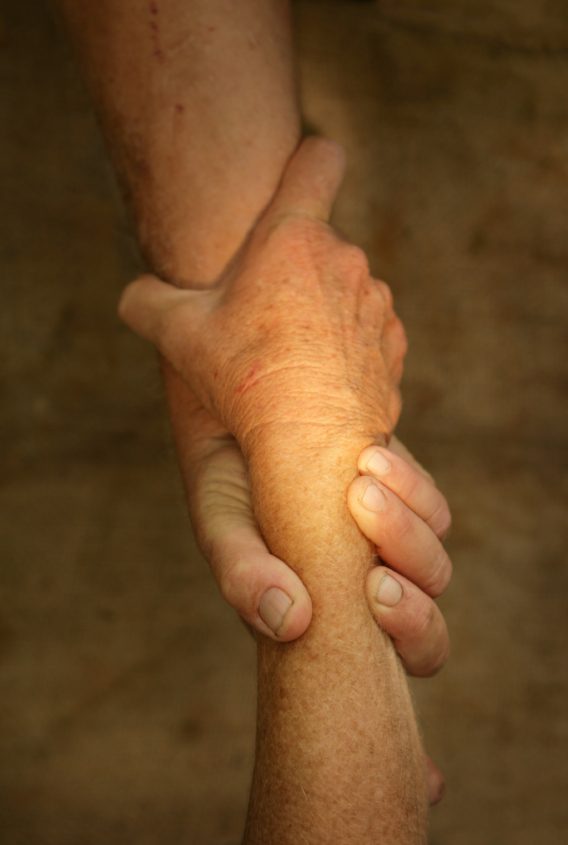
support-handsI’ve been thinking about redemption a lot lately, the ordinary layperson kind, not the overwhelming Biblical sort. You might call it garden-variety grace, whatever that otherworldly “thing” is that softens your day and lets you keep going. It might not be grand enough to wash away your sinful past, but it will carry you through to dinner.

I’m talking about the kind of mending that allows you to realize, deep down in your gut where it counts, that you did the best you could, that you meant no harm, that you will try again tomorrow to do better. That you are a well-intentioned Everywoman making her way in the world with as much awareness and intention as you can muster, and that sometimes you don’t get it right. (Why do my mistakes, even the small ones, shame and haunt me so?)

You might call it a spiritual do-over, a chance to say you’re sorry; give money to the man in front of the grocery store; rescind the honking of your horn at the driver who hesitated too long to suit you at the corner of Hillsboro Road and Abbott Martin; call your mother because she gets scared at night now that your father is dead.

Maybe it looks like an opportunity to be forgiven my own self, this everyday redemption I dream about.

Amy Lyles Wilson

Writing Prompt: When did you first experience redemption? I’ll set the timer for 20 minutes. Go!
Keeping Kin

StPetersCemetry“I’m Earl’s youngest.”

I must have said it ten times as a reference point for people who looked familiar but forlorn as we came together to bury my aunt in Oxford, Mississippi.

My father’s been dead for fifteen years, and my mother is out of touch now due to dementia, but these folks—blood kin and otherwise—gathered at the funeral home on Highway 6 still link me to my heritage. They are my people.

Oxford is where my parents met in elementary school, attended University High, and were graduated from Ole Miss. It’s where my family went throughout my childhood to visit grandparents and aunts and uncles. Cousins. It’s where I had my first panic attack in my early twenties, realizing I didn’t belong in law school and that I was about to undo years of dreams–other people’s dreams–by dropping out. It’s where we buried Daddy. And it’s where I married the love of my life at age 41, in the same church where my parents said their vows in 1948. Lafayette County will always have hold of me.

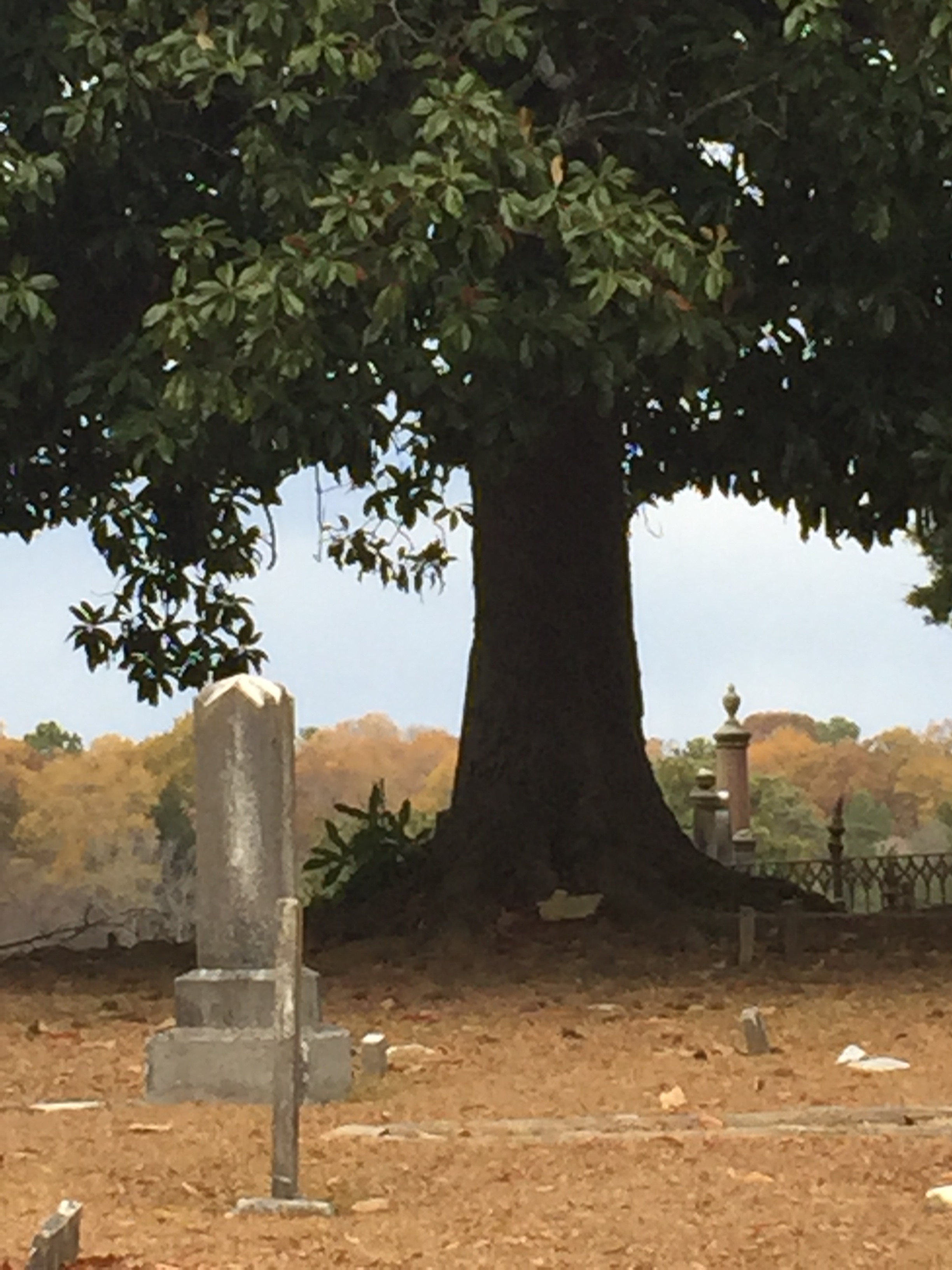
St Peter’s Cemetery embraces more family members than I care to remember. But remember I did, tiptoeing over ancestors as I made my way to the Wilson monument on the hill to escort another loved one across the threshold.

“We’ve saved a plot for you,” my mother said to me once when we visited the cemetery to place flowers on the grave of a Wilson or a Lyles. I was single then, and my “bless your heart” parents thought it would always be so, that I would end up next to them in death, close by, just as I had been for most of my life. Too close, perhaps. It did not seem the time or place to tell her I plan to be cremated, married or spinster, my remains cast to the wind hopefully in North Carolina, where I feel more at home than I ever did in my hometown.

“Thank you,” I said.

My father is there, both his parents, my mother’s parents, too, second cousins twice removed, a couple of relatives I have no clue about (why don’t I remember Roxie Malinda?), and a precious child who died soon after birth. They’re all accounted for, surrounded by friends known to several generations of my family. I recognize names like Clark and Howell and Ivy from years of recollections offered up during holiday dinners and family reunions.

When I was younger—I’m 53 now—I thought I knew enough of my family’s lore. But on that day, as we said another goodbye, I realized I do not know enough.

Taking the Long Way Home

Today my idea of exercise was to walk the mile from my house to Whole Foods, eat lunch, and walk back. All I could manage.

Soon after I hit the sidewalk, I noticed a woman up ahead who kept turning back to look in my direction. Her steps were steady, but after every two or three, she turned. Was she confused? Lost? In need of medical assistance? Surely I could be the one to save her!

Taken while on retreat at Magnolia Grove Monastery.

When I caught up, she told me she’d been looking for her husband, who had started out after she did.

“My eyesight isn’t what it used to be,” she said, “so I wasn’t sure who was walking behind me. You know your body starts playing tricks on you when you get older.” She was smiling when she said it.

“Yes ma’am,” I responded. “That’s one reason I’m out here today. I’m fifty-three and am trying to get in better shape. I haven’t been all that physically active up until now so it’s a bit of a challenge for me.”

“I understand. I’m eighty-six, and I do three miles every other day.”

“Eighty-six?” I might have said this with a little too much gusto, but this woman looked fabulous, trim enough to pull off wearing one those skirts over her leggings.

“Had a birthday last week. My husband, he’s ninety. He does five miles, every day, no problem.”

“Five miles!” I might have been screeching by this point, what with the shame of it and all.

“Yes,” she said, smiling again. “We’re doing what we can to stay in the game.”

Indeed, I thought, but what I said was, “You’re inspiring me.”

“Well, you’re doing good too, Hon, getting in the habit.”

We introduced ourselves before I walked on.

I made it to Whole Foods, ate my salad (no cheese! no dressing!) and drank my green juice.

And then I took the long way home.

The Bright Light of Day {Can I Stand the Heat?}

DSC_0104
I saw this fabulous Chihuly sculpture several years ago at the Cheekwood Botanical Garden and Museum of Art in Nashville.

During Holy Week I heard a lot about being in the dark. From speakers, priests, books I’m reading. Dark, dark, dark.

Barbara Brown Taylor spoke about how she thinks some folks spend too much time focused on “full solar spirituality,” neglecting entirely the darker side. A priest noted that she learned things about herself, and her God, while struggling through a rough time in her life. Much of what I’m reading now focuses on Buddhist and Celtic practices, which reminds me that I have to go through the desert in order to experience and appreciate renewal.

I wonder about people who refuse to acknowledge the death and destruction in the Bible. In our lives. I believe in the power of positive thinking–and prayer–as much as the next gal, but life is hard, people. Denying that reality does not equal faith. Always seeing the glass as half-full does not make you a more steadfast believer. It might make you less able, in fact, to deal with the half-empty days. And there will be such days.

Sometimes I see dark when things are simply murky, though, and that’s a problem. I worry that I’m more comfortable wandering through the night than embracing the bright scrutiny of day. I’m working on it. But I’m not afraid, not on any cosmic level, to sit with people who are grieving or hurting or scared. Maybe it’s easier to companion others than it is to befriend my own soul. What is that about? 

“This is the day that the Lord has made,” read the Episcopal lectionary during Easter. “Let us rejoice and be glad in it.”

I respect the darkness, and value what it has to teach me. But today I choose the light, trusting full well there are lessons there, too.