Interview with Cool People Care

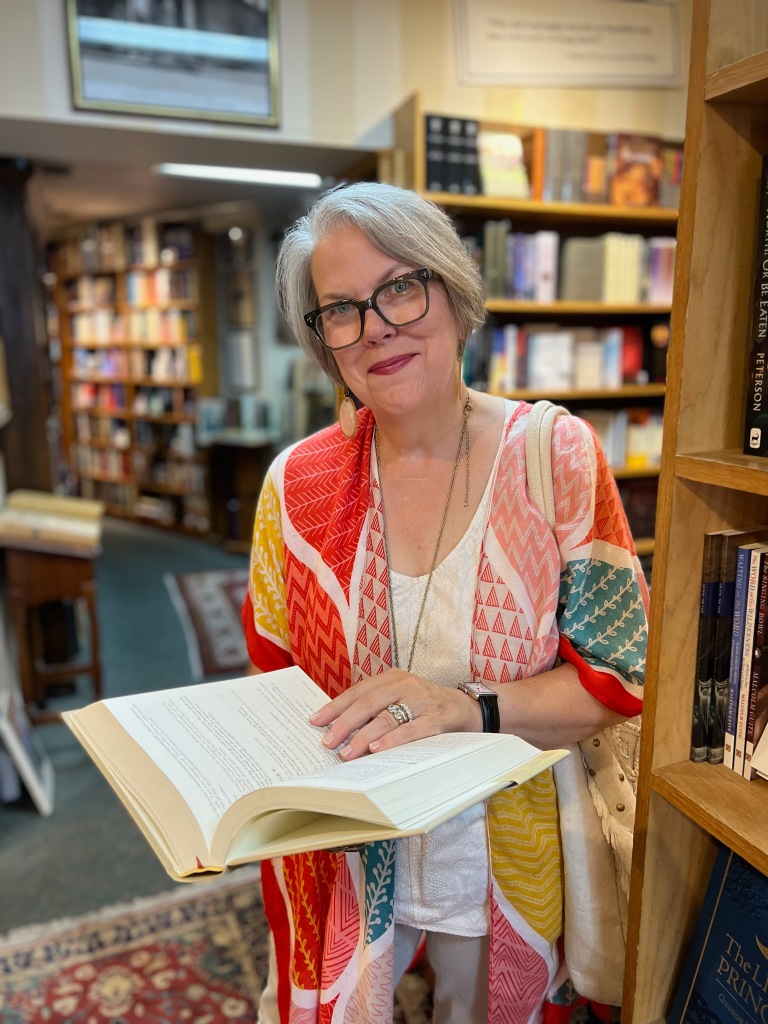
The fine folks over at Cool People Care (CPC) were kind enough to interview me about the power of storytelling. CPC does great work, and they exist to make a difference. Check them out if you’re not familiar with this forward-thinking group.

CPC: You say that “it’s the telling of our stories that saves us.” What do you mean by that?
Wilson: The guiding principle for my work is my belief that it is the sharing of our stories that saves us. By this I mean that we need to be reminded we are not alone. Be it in good times or bad, commiseration or celebration. Humanity is best served when we are willing to unlock our hearts for one another, and one way we can do that is by offering up our individual stories to our families, friends, and communities, and, if appropriate, the world.

You can read more here: http://www.coolpeoplecare.org/its-time-to-share-our-stories/

On Being Southern in Seaside

I’m just back from a fabulous trip to Seaside, Florida, where I had the pleasure of hanging out with authors John T. Edge and Shellie Rushing Tomlinson. You might know Edge for his in-depth work on the sociological and historical aspects of food, and Tomlinson for her high-larious take on being a southern belle. If you don’t know these two writers, please check them out.
The weekend, sponsored by Escape2Create, was entitled “Voices of the South,” and it was all about the food, culture, and ethos of being Southern. I facilitated an Amherst Writers and Artists workshop around the topic of food, where I wrote with some amazing women. On a rainy Saturday morning, we gathered around a farmhouse table in a stunning home that reminded me of Martha’s Vineyard. We spoke of the challenges, and payoffs, of living a writing life, whatever that might look like for our individual lives. Some of us are called to write for the public, others for our families. Some craft in rhyme, others in long form essay. But I dare say the end result is the same: “It’s the sharing of our stories that saves us.” Repeat after me.
You don’t need Cape Cod when you’ve got the beaches of 30A, and celebrating the South in Seaside was a treat indeed. With its engaging architecture, good food, fun shops, breathtaking atmosphere–and delightfully friendly and helpful residents–it was hard to leave. Thank you, fine people of Seaside, for making my first trip to your oasis so memorable. It had been a goal of mine to sign at Sundog Books, and look at me, I made it. Thank you, Linda and Bob White, for a dream come true.
I encourage all artistic types to check out the residences and other programs offered by Escape2Create. It will do your work, and your soul, good.

Nashville February 2012 Women’s Writing Circles!


The Circles are conducted in the spirit of Amherst Writers and Artists, which fosters a safe, supportive environment for people to write what they have not yet put into words; ask the questions for which there are no easy answers; and give rise to voices that have long been kept silent.

Amy Lyles Wilson is a trained affiliate of Amherst Writers and Artists.

1. Saturday, February 4 @ALIGN Wellness Studio in Belle Meade

http://www.nashvillealign.com/index2.php#/home/

$50.00/Call to pre-register: 615-383-0148

2. Saturday, February 11, @ALW’s Home in Green Hills

$45.00/Email to reserve your spot: hamblett2@mac.com

Gather for Conversation (optional): 9:00 a.m.-9:30 a.m.

Writing: 9:30 a.m.-12:30 p.m., with breaks

Call/email if you need directions and/or have questions.

522-1196; hamblett2@mac.com

Policies for 2012:

Please be in your chair by 9:30 for a prompt start.

Need to cancel? Call/email before noon on the Wednesday before Circle. If you cancel after that time, or don’t show up, you’ll be expected to pay the entire fee. Exceptions made for emergencies.

Spots are reserved on a first-respond basis and a waiting list is kept.


I hope to write with you soon. . .

Amy Lyles Wilson

http://www.amherstwriters.com & http://www.amylyleswilson.com

Next Post

Creative Resolutions 2012:

A Writing Workshop for Women with Amy Lyles Wilson

After you’ve vowed to lose weight, be nicer to your neighbor, and keep a cleaner house, why not spend some time crafting your creative goals for the New Year?

Writer Amy Lyles Wilson believes it is the sharing of our stories that saves us, and she invites you to write your heart out in a supportive environment designed to encourage your voice and silence the inner critic. Through prompts, readings, and resources, you’ll get the New Year off to a productive start in this workshop facilitated under the principles of Amherst Writers and Artists. This is not a critique group, and writers of all experience—and confidence—levels are welcomed, respected, and nurtured. Come claim your chair around the table for a morning of creativity and conversation.


Saturday, January 14, 2012

Coffee & Conversation: 9:00 a.m.

Workshop: 9:30 a.m. to 12:30 p.m.

Cost: $45:00

 Location: Green Hills, Nashville, TN

“The Language of Loss” @ Holy Family Catholic Church

“The Language of Loss: Putting Grief into Words”  

Saturday, 10/22/11 9:00 a.m. – 2:00 p.m.

Holy Family Catholic Church

9100 Crockett Road, Brentwood, Tennessee 

Contact Janis Lovecchio. Holy Family Catholic Church, at 373-4351, Ext. 235 or janis.lovecchio@holyfamilycc.com.

Burying a loved one, being downsized at work, growing old, feeling abandoned by God, letting go of a dream…any one of life’s losses can leave us speechless. All of a sudden, the language we’ve relied upon for years no longer has the power to get us through the day, much less express our anger and confusion about our circumstances. Join us and we’ll talk about loss, and language, and the grace that must surely come in-between. Together we’ll find the words for those times when mere words just won’t do.

—Amy Lyles Wilson

Amy Lyles Wilson

Women Who Write: Fall 2011

Here are my workshop and retreat offerings for the fall. I hope to write with you soon.

Amy Lyles Wilson

OCTOBER 1, 2011: Women’s Writing Circle @ ALW’s

Gather at 9 a.m.; Write and Reflect from 9:30 a.m. to 12:30 p.m.

Cost: $45

OCTOBER 22, 2011: “The Language of Loss: Putting Grief Into Words”

Workshop at Holy Family Catholic Church in Brentwood, facilitated by ALW. Details to come.

NOVEMBER 13-14, 2011: “The Language of Loss: Putting Grief Into Words”

Retreat at St. Mary’s Sewanee facilitated by ALW; more info here.

NOVEMBER 19, 2011: Women’s Writing Circle @ ALIGN Wellness Studio in Belle Meade

Gather at 9 a.m.; Write and Reflect from 9:30 a.m. to 12:30 p.m.

Cost: $50

Call ALIGN to reserve your spot! 383-0148

DECEMBER 3, 2011: Women’s Writing Circle, Holiday Edition, @ ALW’s

Gather at 9 a.m.; Write and Reflect from 9:30 a.m. to 12:00 p.m.

Potluck Lunch (I’ll do the main dish, which means Precious will cook for us) and Readings (bring something you’ve been working on) from 12:15 until we get tired of each other.

Cost: $45:00

Here’s Hoping Fifty Really Is Nifty…

From Her NashvilleAugust 2011

This month I turn 50. As in, half a century. As in, at least half of my life is gone. It sounds depressing, and in some ways I guess it is. But for the most part, it feels like a gift.

Earlier this year, I vowed to become as healthy as I could before my momentous birthday. I increased my visits to the shrink, started getting acupuncture, hired a personal trainer, scheduled facials on a regular basis, tried to give up carbs, and took up yoga. I had hoped the big day would approach and find me 30 pounds lighter and boasting a low cholesterol number. Alas, those things did not happen. What I can celebrate, though, is feeling more like myself than ever.

Read more here…

Love Affair, Interrupted: The Ones Left Behind

He looks like Grandmother Wilson,” I said, remembering my paternal grandmother, who died in the early 1980s.

Yes,” said my mother. “He does.” She took a shallow breath and then, “Why did this happen?” Mother stared at Daddy and I patted him on the shoulder, which seemed to make me feel like I was doing something helpful.

“Would you like to go ahead and take his jewelry with you?” asked the nurse.

His wedding ring and class ring (University of Mississippi, Sigma Nu, 1948) came off fairly easily, but the watch was harder. His hands had always been big—something I inherited from him, along with his sensitive skin and his tendency toward impatience—and it seemed his hands and wrists had doubled in size since he’d been in the hospital. Watching the nurse struggle became too painful. “Greedy daughters take jewelry off dead father. Film at eleven.” In reality, we were simply clawing for any piece of Daddy that we might keep, anything that might outlast death.

“I’ll get that off for you later,” said the nurse.

Mother cradled his wedding band in her palm, and I slipped the class ring on the thumb of my right hand. It was too big, even for my pudgy fingers, but I wasn’t about to let go.

“Sometimes I like to pray with the family,” said the nurse. “Is that all right with you?”

Who knows how each of us prayed silently as the nurse spoke, her voice soft and clear and sure as she asked for the emotional healing of my family. Her short hair and wire-rimmed glasses gave off a certain air of efficiency, but it was not just about the job for this woman. It was about us, too, the ones left behind. The ones she could still help.

As for me, I thanked God for giving me such a fabulous father. And then I bawled like a baby.


Love Affair, Interrupted: “Just Like That”

Reservation Confirmation for Martha and Earl's Honeymoon in 1948

“The obituary pages tell us of the news that we are dying away while the birth announcements in finer print, off at the side of the page, inform us of our replacements…”—Lewis Thomas, The Lives of a Cell

As my father drew his last breath, he did not rise up to confess the name of an unknown love child or reach out to my mother to proclaim his love one more time. He simply died.

“Is this it?” asked Mother. At 78, she looked like a child who had lost sight of her parents in a crowded shopping mall.

“I think so,” I told her, crying, searching the nurse’s face for a signpost of my own. She nodded.

“Yes,” I said to my mother. “I think this is it.” She climbed onto the hospital bed and lay down beside Daddy, cradling his head in her arms and whispering into his right ear. She was wedged between the side rails and her soulmate. My two sisters and I huddled around the other side of the bed, taking turns telling Daddy good-bye. Later we discovered that Ann and Mother were begging him to stay, while Ginny and I were telling him he could go, his work with us was done, he had done it well. We did not know if Daddy could hear us, and in light of the conflicting messages, maybe it’s best if he didn’t. It’s a good thing Daddy always knew his own mind.

It became obvious rather quickly that my father was indeed dying. Numbers dropped on machines, glowing lines lost their arcs and veered toward flat. I know you’re not supposed to be able to hear hearts break, but I swear I heard something, loud and clear. After twenty-four hours of his head swaying back and forth, his face obscured by an oxygen mask, the first love of my live was gone.

The nurse moved to turn off the machines that accompanied my father from this life to the next. Despite her best efforts, she could not get one of them to stop beeping.

“I’m sorry,” she said. “I don’t know what’s wrong.” More beeping.

My friend Mary said when her sister died of skin cancer—she was only 35—there was a death rattle, sort of a guttural sound. All I heard, besides the beeping, was absence. Ann, Ginny, and I helped Mother down from the hospital bed. We gathered ourselves one into the other and moved around the room as a single unit, a glob of grief, not knowing where to go or when to stop. Occasionally one of us reached for a tissue or glanced out the window at the skyline of the city that had served as our family’s backdrop for more than half a century. But mostly we drifted around Daddy’s bed, first one side, then the other.

When Mother sank to the floor in a heap, phrases that didn’t begin to do the scene justice came to mind: thought I might die; took my breath away; hit me like a ton of bricks; I was beside myself. I kept looking for the just-right cliché, but I did not find it. As a daughter, I was speechless. As a writer, I was at a loss for words.

When a doctor entered the room, my mother looked at him square in the face and wailed, “Why did this happen?”

“Blood vessels get weak over time,” he said. “There was nothing we could do.”

“She thinks she might have done something to save him,” I said, softly. “She thinks it’s her fault.”

I was pleading to a stranger for some remnant of reassurance. Anything. The last family member to arrive at the hospital, I wasn’t introduced to the doctors, wasn’t allowed to view X-rays my sisters saw, pictures that convinced them our father could not be saved.

“We’ve already told her it wasn’t her fault,” said Dr. Meany Pants, curtly, before leaving the room. “Your mother knows better.”

Note to self: After suitable mourning period, confront people who piss me off during the process.

The curtain that separated us from the rest of the world, the world of the living, made a slight shushing sound as it came together behind the doctor.

“Wow, the color sure goes out of you fast,” I said to the nurse, as my father faded to white from his head down.

“Yes, it does,” she replied.

Did I just use the word “wow”? Surely something more meaningful was in order.

“How long can we stay?”

“As long as you like.”

“We might be here a while, then,” I said, but I did not know how long would be long enough. I did not know anything.

I asked the nurse to remove Daddy’s oxygen mask and take out his mouthpiece. The minute she did, I was almost sorry, because then I could really see my precious father’s face. I was reminded this was not some sort of terrible mix-up, like when surgeons remove a kidney instead of a lung or amputate the wrong leg (you read about that all the time). Daddy is dead. Repeat after me.

I made my way toward him—it did not occur to me to say, “the body,” for even without breath, he was still my daddy—and smoothed his bushy eyebrows. In doing so I accidentally raised one of his eyelids and saw into the nothingness of his eyes, eyes that used to light up when he saw any one of his girls come into a room. Always a believer in another world beyond this one, I saw for myself, in that very instant, that something separate from our skin and bones, something apart from our organs and tissue, makes us who we are. Call it spirit, call it soul, call it whatever you wish. Whatever it is, it no longer resided inside my father. Just like that.